NY Building Series: 10 Interesting Buildings - The Second Five
The Willard Hotel has a rich history that spans over two centuries! It all started in 1816 when six small houses were built on the property and used as a hotel for the next 30 years. Over the years, the hotel changed names several times and by 1847, the six small houses had fallen into disrepair. That's when Henry Willard came along and transformed the rundown structures into a single, four-story hotel that he renamed the Willard Hotel.
However, owning the hotel didn't come without its challenges. In 1864, Willard purchased the hotel property but a disagreement over the purchase price and form of payment resulted in a major equity lawsuit that made it all the way to the Supreme Court of the United States. The court ultimately ruled in favor of Willard, but he had to pay the purchase price in gold coin rather than paper currency, which had lost its value at the time.
The Willard Hotel we know today opened its doors in 1901 and has seen its fair share of notable events and guests. In 1922, the hotel suffered a major fire that led to the evacuation of famous guests such as Vice President Calvin Coolidge, several U.S. senators, composer John Philip Sousa, and other media, corporate, and political leaders who were attending the annual Gridiron Dinner.
For many years, the Willard was the only hotel in downtown Washington that offered easy access to all the city's hotspots, so it became a hub for dignitaries, celebrities, writers, and other notable figures. In fact, Martin Luther King wrote his famous "I Have A Dream" speech in one of the hotel's rooms in 1963.
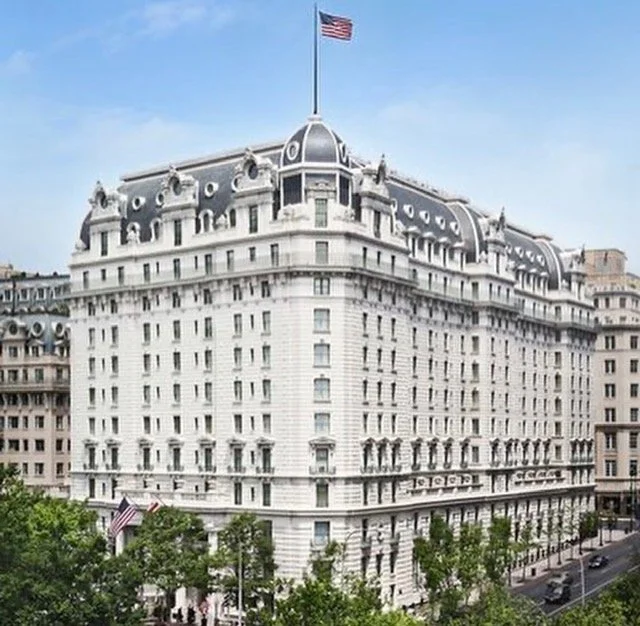
Unfortunately, the hotel experienced a period of mismanagement and decline after the Willard family sold it in 1946. It closed without warning in 1968 and sat vacant for years until it was eventually sold to the Pennsylvania Avenue Development Corp. and restored to its turn-of-the-century Beaux Arts elegance. The InterContinental Hotel Group later became a partner in the restoration process, which included adding an office building contingent. The grand reopening took place in 1986. The Willard Hotel was added to the National Register of Historic Places in 1974.
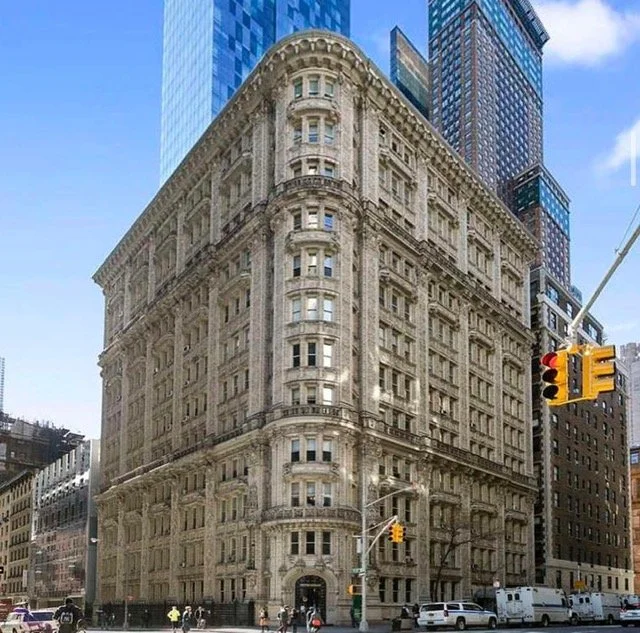
The Alwyn, a stunning luxury apartment building in New York City, stands out from its peers in many ways. Unlike other buildings of its time that only boasted ornate details at the top, The Alwyn has decorative terracotta details spread throughout its facade. The stunning decorations include quattrocento-style pilasters, beautiful canopies, and crowned salamanders that represent Francis I. The bays are separated horizontally by decorative pilasters topped with Corinthian-style capitals, and there are even decorative spandrel panels between the windows on each floor. At the top of the building, a cornice projects from the roof, adding to the already impressive structure.

When The Alwyn was built in 1909, it was a beacon of luxury living. The apartments typically had 14 rooms with 5 bathrooms and rented for up to $10,000 per year (equivalent to about $328,758 today). Each apartment was adorned with beautiful carved woodwork, bronze and iron light fixtures, ornamental plaster, and imitation Caen stone. The building quickly became one of the most expensive apartment buildings in NYC by late 1910 and continued to be so until around 1930 when the area it was located in experienced socioeconomic changes that made it less desirable. The building went up for auction in 1936 and was remodeled in 1938. In 1979 it was bought and converted into a co-op and added to the National Register of Historic Places.

By the late 1990s, The Alwyn's facade was in poor shape, but it was rehabbed and received the Lucy G. Moses Preservation Award for its stunning restoration in 2002 from the New York Landmarks Conservancy. Today, The Alwyn Court has regained its status as a luxury apartment building and has even become part of Billionaires' Row. So, if you're looking for a taste of historic New York luxury, The Alwyn is definitely worth checking out!
Back in 1925, The Miami News, the city's first newspaper, needed a headquarters, and so they built the Freedom Tower. Designed in the Mediterranean revival style after the Seville Spanish cathedrals, this iconic building has an impressive history.

From 1962 to 1974, the federal government used the tower to process and document Cuban refugees, earning it the nickname "Ellis Island of the South." The government then sold the building to private buyers.
In 1997, the Mas family, led by the prominent Cuban-American businessman and anti-Communist Jorge Mas Canosa, purchased the building for $4.1 million. The family then restored the tower to its original state and transformed it into a memorial for the refugees who had fled to the US from Cuba. It was now home to a museum, library, meeting hall, and the offices of the Cuban American National Foundation.
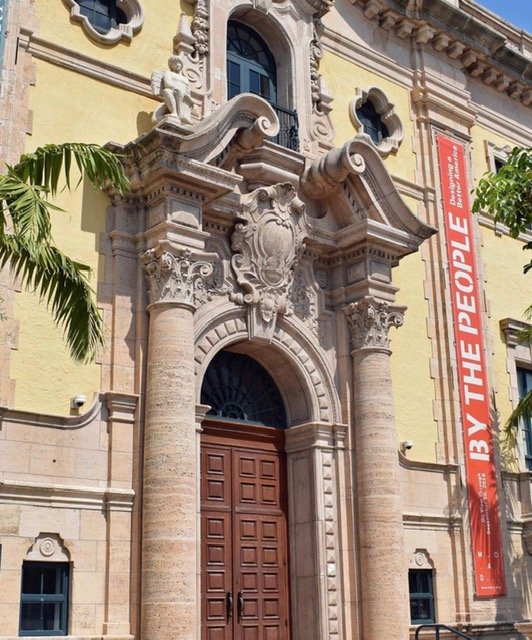
In 2005, the Freedom Tower was purchased by Terra Group father and son, Pedro and David Martin, along with 600 Biscayne LLC and its members. This purchase eventually led to the Freedom Tower being donated to Miami Dade College, under the leadership of Miami-Dade College President, Dr. Eduardo Padron.
As part of the donation agreement, the College was required to create a Cuban exile experience, and the tower is now used as a museum, cultural center, and education center. Today it is the home of the Cuban American Museum, and it was added to the National Registry of Historic Places in 1979 and became a Designated Historical Landmark in 2005.
The Freedom Tower is not just a building; it is a testament to the strength, resilience, and perseverance of the Cuban-American community. It has a rich history that reflects the struggles and triumphs of those who came to America seeking freedom and opportunity.
Get ready to step back in time with a visit to the Cable House, one of Chicago's last remaining mansions! Built in 1886 for socialite Ransom R. Cable, the president of the Rock Island and Pacific Railway Company, this stunning Romanesque-style home is steeped in history.
In 1902, the McCormick family purchased the Cable House for Robert Hall McCormick III, who was the head of the McCormick Estate. The home is located in a part of the Near North Side neighborhood that was once known as "McCormicksville" due to the concentration of McCormick family members living within a few blocks of each other.
After the McCormick family moved out in 1926, the home was sold and eventually became a funeral home. Thankfully, in recent years, the Cable House has been restored to its former elegance by its current owner, Driehause Capital Management, operated by Richard H Driehause, and Antunovich Associates.

The restoration process was carefully managed to comply with the strict guidelines established by the City of Chicago Historic Preservation Commission. The house's interior was also reconstructed to meet the requirements of the Driehaus Securities Corporation while still preserving the original building's elegance.

With its wood moldings, marble inlay, and plaster details, the Cable House's stunning features have been brought back to life. It's no wonder the house was designated a Chicago Landmark in 1991.
So, if you're looking to experience a piece of Chicago's history, make sure to add the Cable House to your must-visit list!
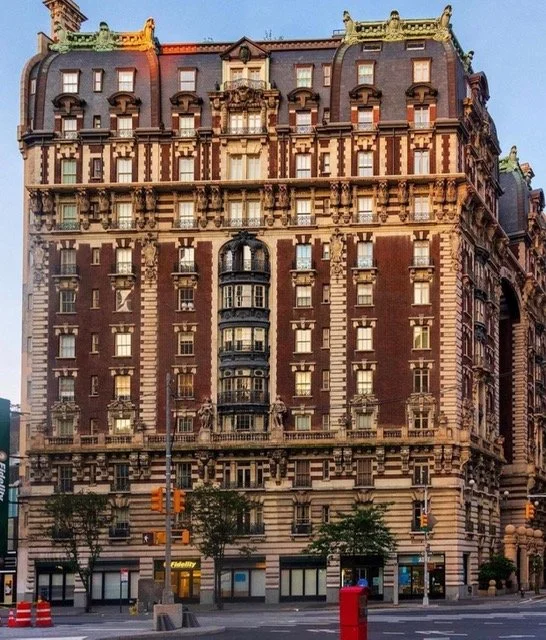
in the Beaux-Arts style. The limestone and brick exterior is adorned with monumental sculptures, elaborately balustraded balconies, and a striking three-story copper and slate mansard roof, which offered more living space. However, when the building was first unveiled in 1902, it wasn't warmly received by the newspapers of the day. Critics complained that it was too bright and garish, with an overabundance of decoration, such as ornate brackets, iron balconettes, and richly profiled broken pediments with cartouches.

Despite the initial criticism, the Dorilton was still considered a luxury building, equipped with all the modern amenities of the day, including heating, lighting, refrigeration, elevators, long-distance telephones, fireproofing, and soundproofing. The apartments were trimmed with elegant materials like mahogany, oak, white enamel, and bird's eye maple, making them the epitome of luxury living. The building was home to numerous famous celebrities and musicians over the years, just like the Ansonia across the street.
Today, the Dorilton has been restored to its former glory. In 1998, the exterior masonry, decorative terra-cotta work, chimneys, and roof were restored. In 1983, it was designated a New York City Landmark and today is still widely considered one of the top four Beaux-Arts designed residential buildings in the city.